Guieldu at the Festillingües Festival
Avilés
LMinorised languages filled La Grapa with music, literature, and creation. Guieldu played at home.
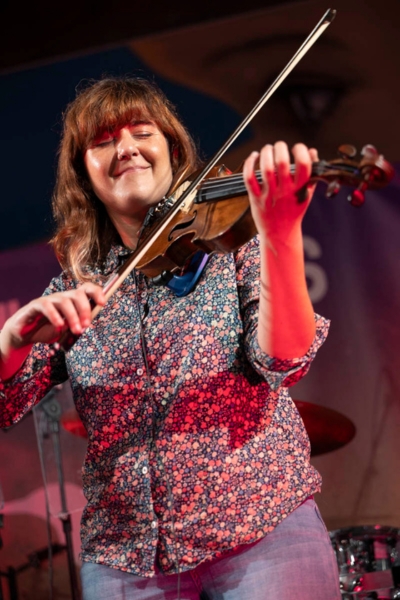
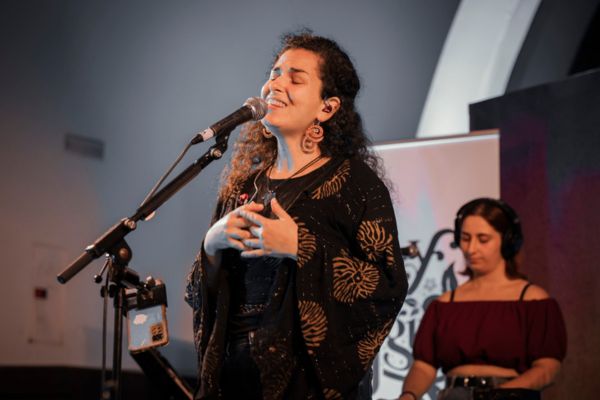
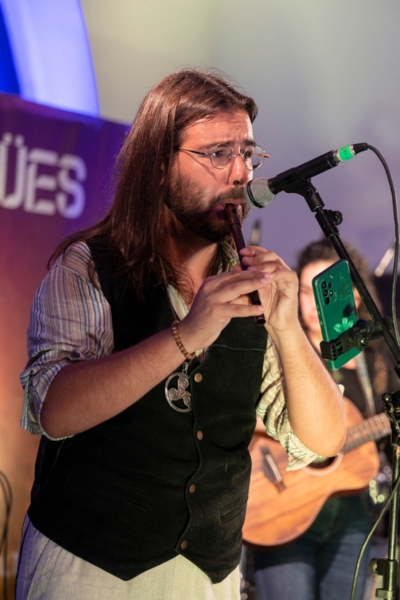
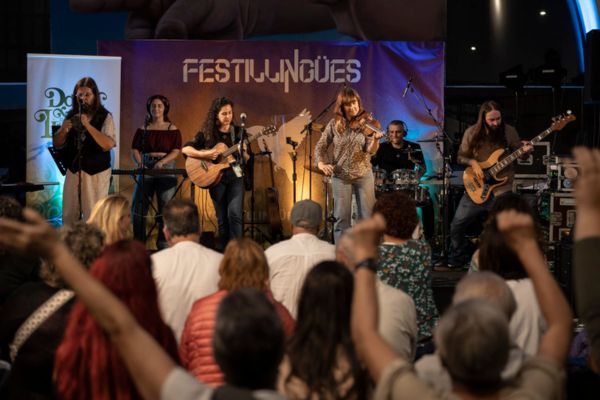
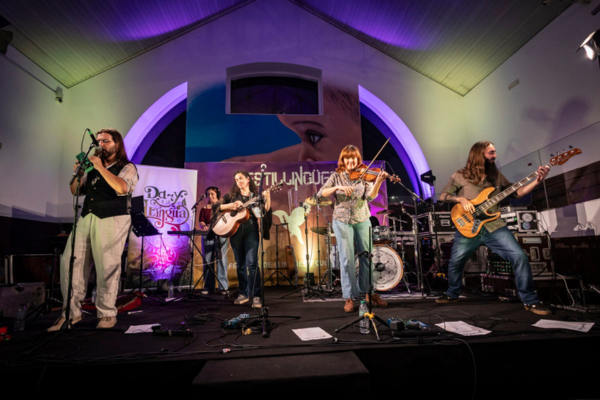
For four days, the Festillingües festival brought La Grapa in Avilés to life with a programme combining music, literature, workshops, theatre, debates, and diverse ways of engaging with minorised languages and cultures. For us, the event had a truly special meaning: on Saturday, we were playing at home, at the heart of a festival that highlights a core element of our own identity.

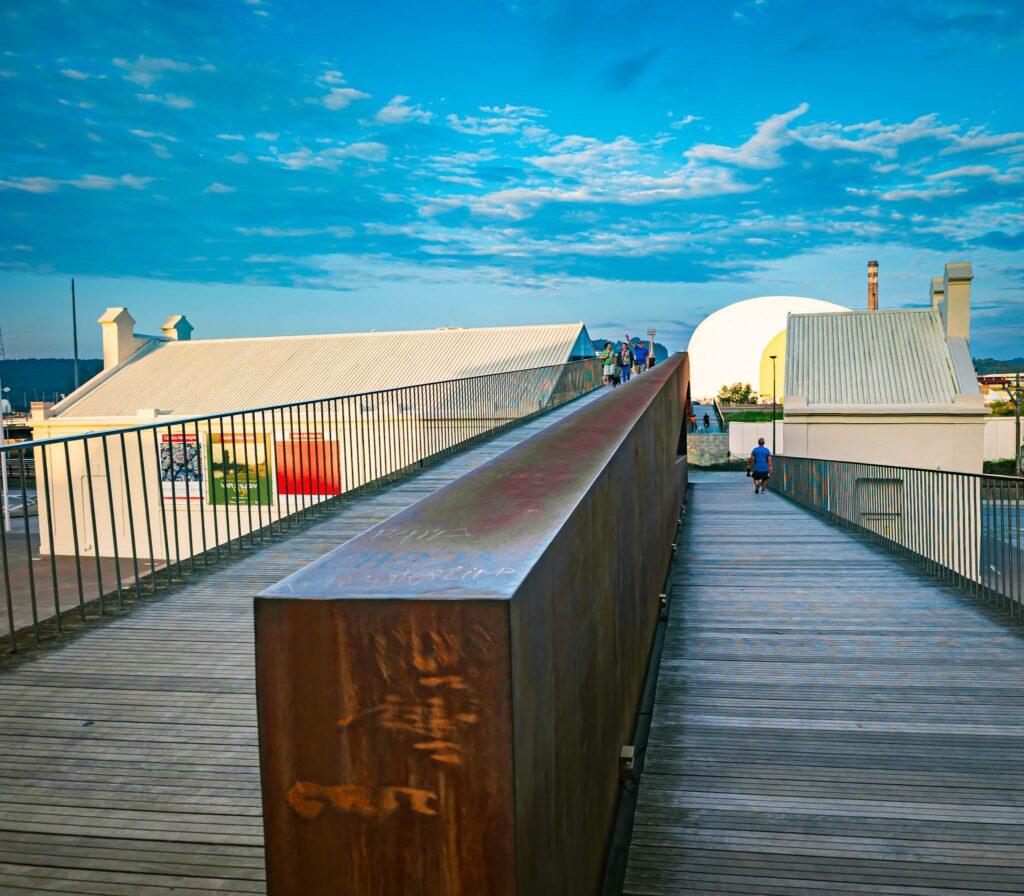
The musical section had already kicked off on Friday with Mestura and Rubén Bada. The following morning, activities resumed with workshops and sessions focused on regional languages. Among them was the music creation workshop led by our friend Vero Rubio—one of those inspiring initiatives that remind us a language isn’t just something to preserve; it is also a living tool for creating new works.
And a few hours later, it was our turn to close the day’s musical programme.
Playing at home is always an exciting challenge and, at the same time, offers a uniquely warm welcome. La Grapa, the old fish market square that now serves as an entrance to the Oscar Niemeyer International Cultural Centre, is a distinctive space in Avilés, and it is always special to see it filled with cultural events. It is one of those places that could easily host even more activity throughout the year, and seeing a festival boldly fill it with creative projects over several days shows just how much can be achieved when we make the most of our urban heritage.
It is admittedly an intimate setting, so our concert unfolded in close proximity to the audience, far from the “big festival stages” we performed on during the summer. The crowd was split between the seated front rows and those who preferred standing at the back. This closer format invited us to explore a more atmospheric side of Guieldu, allowing certain tunes to breathe with a different sense of calm.
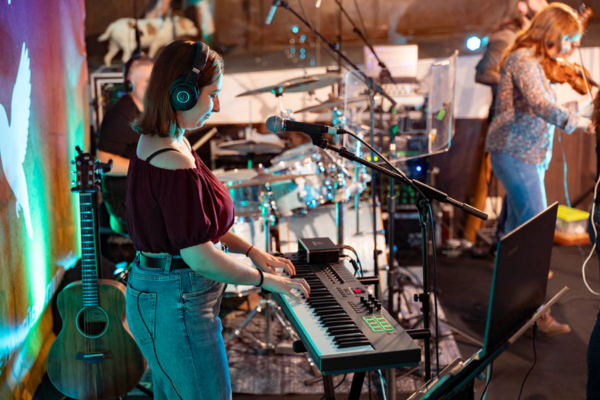
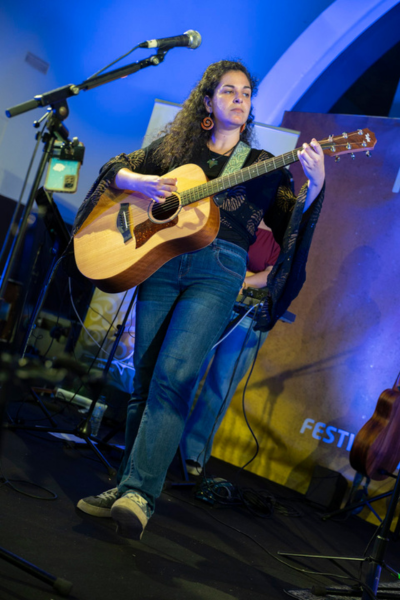
Our relationship with our native language was also part of our musical narrative. Most of our vocal tracks are sung in Asturian—not as a political statement, but simply because it is the language in which singing comes naturally to us and forms an integral part of who we are. At a festival specifically dedicated to minorised languages, it was impossible not to reflect on this. Asturian still lacks official legal status in Asturias, whereas Mirandese, its closest linguistic relative just across the border, has been officially recognized in Portugal since 1999.
This connection also reflects in our music. Angueira, for instance, originates from a traditional melody from Miranda do Douro, a territory where a variant of Astur-Leonese remains vibrant and alive. You don’t have to look far to find these shared cultural bridges.
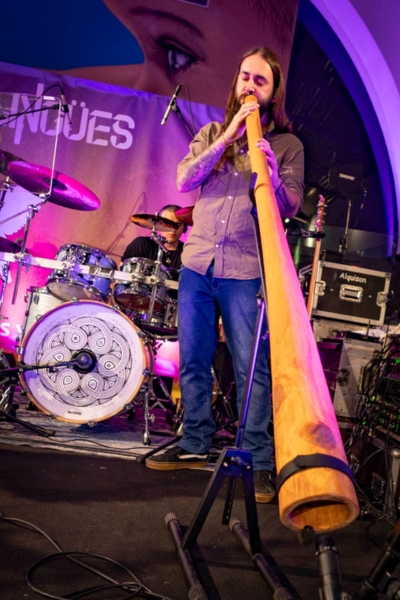
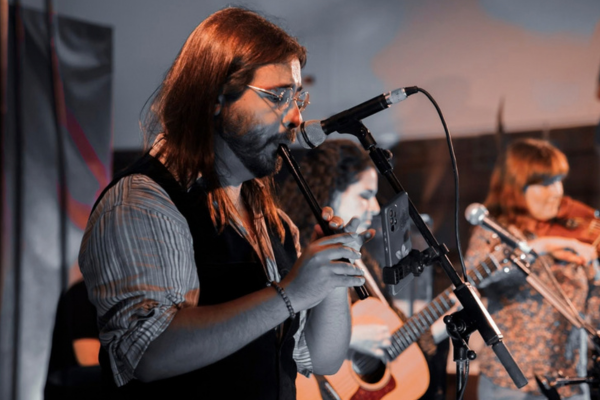
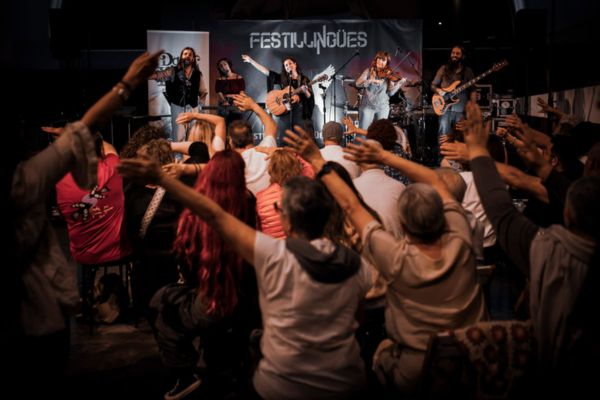
And even though the concert had a more relaxed tone, as often happens when we play, the music eventually led people to dance.
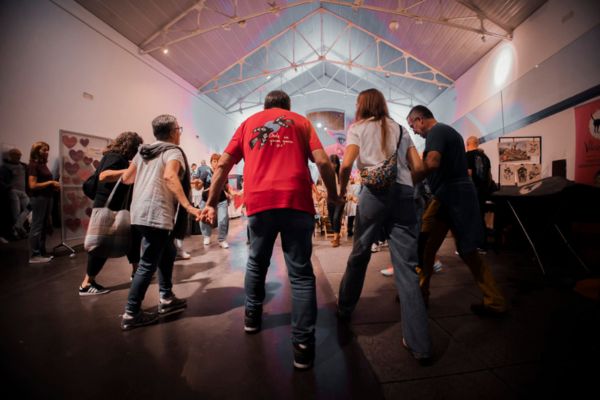
As soon as the first chords of Óise l’Ixuxú struck, a few audience members started dancing the muiñeiras of the set. Shortly after, the danza formed—the traditional communal ring dance so deeply rooted in Asturian heritage (very similar to Breton circle dances) and particularly alive in Avilés. Young and old shared the steps together spontaneously, without needing any explanation or reminder that this, too, was an essential part of the show.
These are small moments, but they are probably the ones that best explain why making music this way makes so much sense.
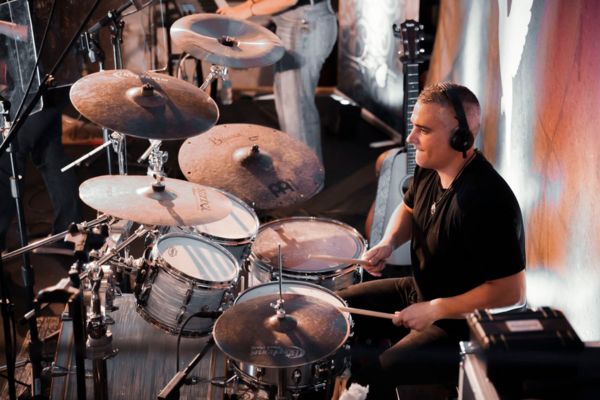
Throughout the weekend, Festillingües celebrated languages, artistic creation, and culture. We joined on Saturday to add our music to the gathering and ended up experiencing something even simpler and more profound: people singing, dancing, and recognizing themselves in what was happening right in front of the stage.
Playing at home is all about that. You don’t need to explain who you are when part of what you carry in your songs is already all around you.
Want to watch the video?
Video and Concert Photos
© Photos: Nacho G.S.